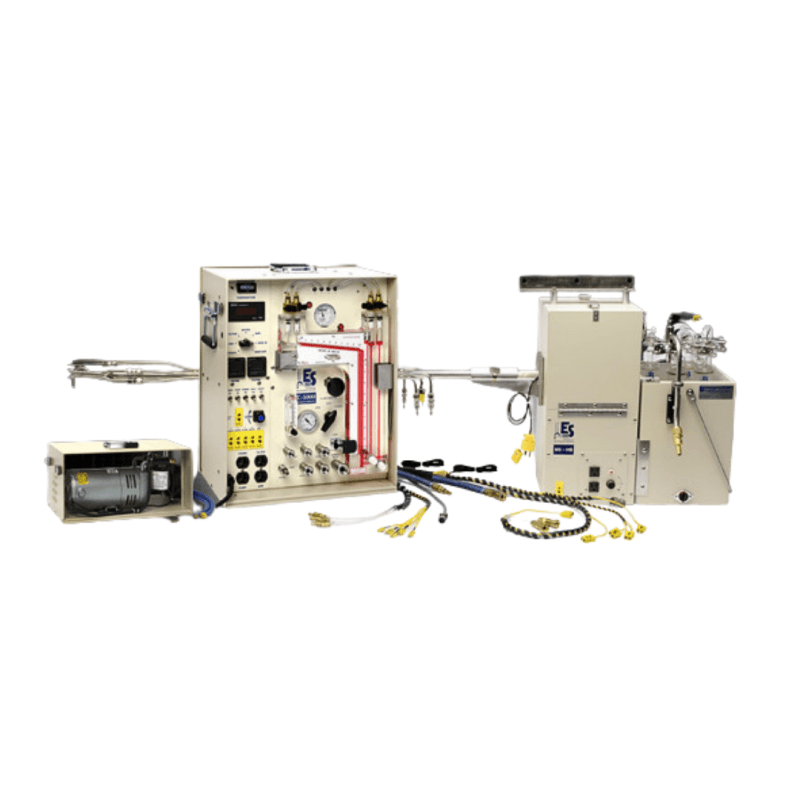
Isokinetic
Following the enactment of the Clean Air Act of 1970 the EPA promulgated a series of stationary source testing methods introduced in the Code of Federal Regulations Title 40, Part 60, Appendix A. The initial EPA Methods 1-4 define the conventions utilized to gather the primary information required to perform isokinetic source testing. This information includes traverse points, stack gas velocity, volumetric flow rate, moisture content, excess air and dry molecular weight of the stack emissions. This data is important for determination of nozzle size, sampling flow rate and other parameters required to adhere to isokinetic sampling principles
- ✔ High Particulate Sampling Accuracy
- ✔ Better Representation of Particle Size and Distribution
- ✔ Reduced Sampling Errors Due to Inertia and Sedimentation Effects
- ✔ Internationally Recognized Standards
- ✔ A Robust Basis for Testing Other Emission Parameters
- ✔ Adaptability to Various Chimney Conditions